
Tag: CERN community
-
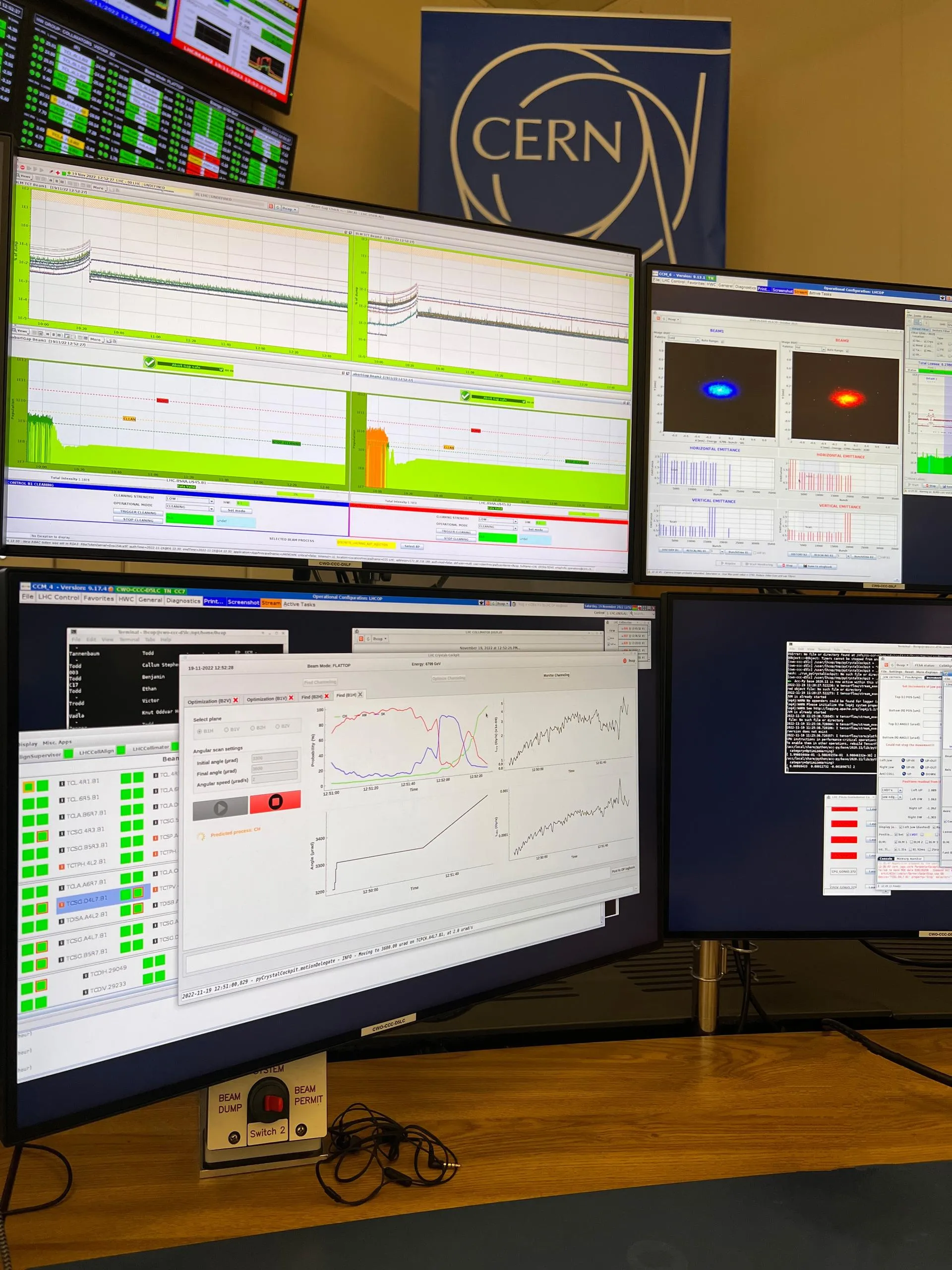
LHC Crystal Collimator Alignment optimized with 1D-Convolutional Neural Network
The Large Hadron Collider (LHC) is set to improve its cleaning efficiency with the use of the innovative technique known as crystal collimation. This technique utilizes bent crystals to deflect halo particles into dedicated collimator absorbers, which helps to increase the betatron cleaning efficiency with high-intensity ion beams. To achieve optimal channeling conditions, the crystals
-
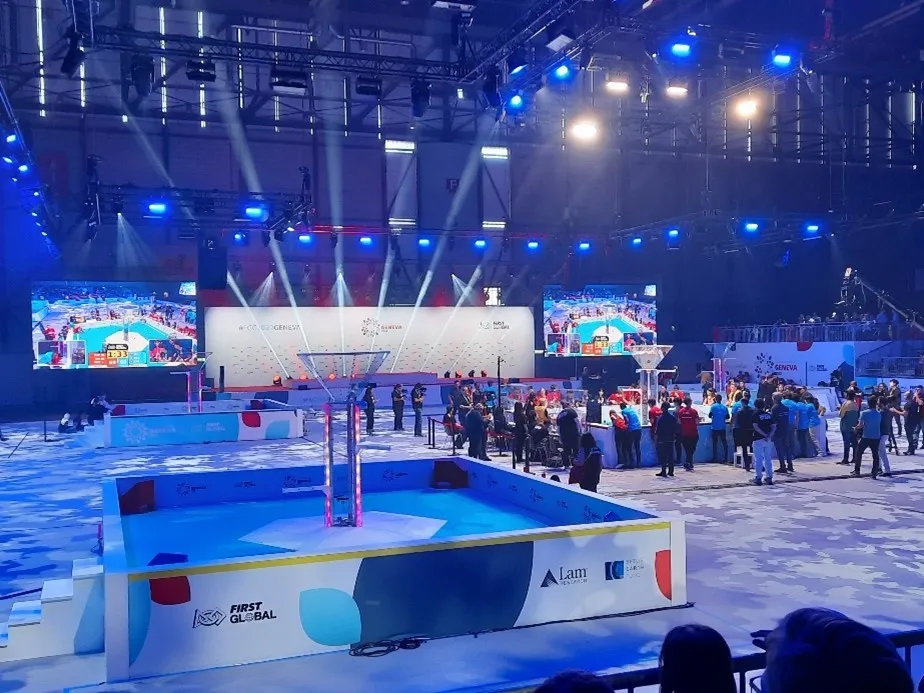
Education Outreach Events for Robotics in 2022
Robotics is increasingly becoming a fascinating tool to increase interest in STEM for high school students, and the public. In 2022, we were involved in multiple outreach projects, and as well of course part of the student shadowing and hosting programme CERN is involved with. Initiative for Girls in STEM: Italian High School Students control
-
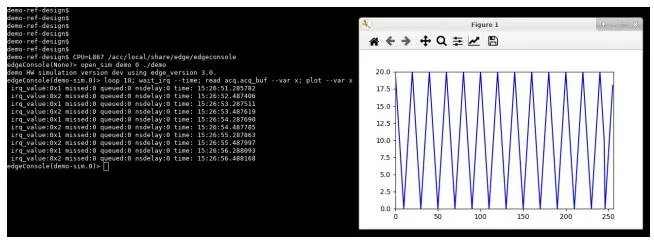
Introducing release 3.0 of EDGE, the automatic Linux device driver generator
Front End Computers (FECs) are at the heart of the accelerator control system. They are typically embedded in a crate and connected over a backplane with dedicated add-in modules to accelerator equipment. The standard way to access these modules from the FEC is through a so-called Linux device driver. Drivers are typically resident in memory
-
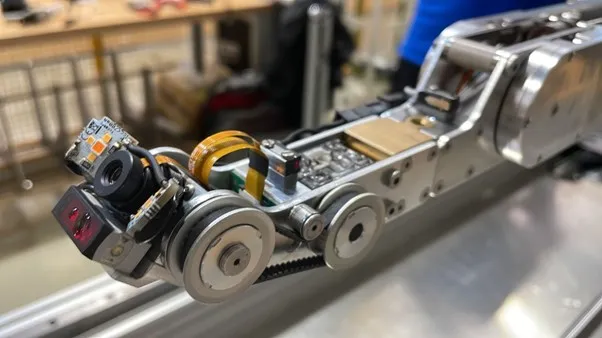
First RF Cavity inner surface fully inspected by a robotic system
Based on our wide-ranging expertise in robotics design and prototypes, we developed the Automated Robotic Inspection System (ARIS), which autonomously meets the needs of the SY-RF group at CERN to visually inspect the entire inner surface of radiofrequency (RF) cavities in LHC, Linac and FCC, and to detect any anomalies at short distance. So far,
-
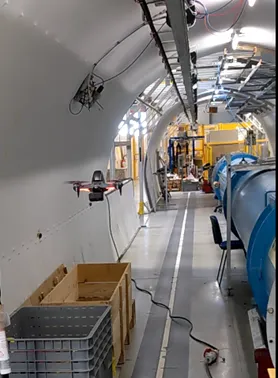
Drone 3D Visual Inspection in the North Area TCC2
The first 3D drone inspection in a high radiation zone has been successfully performed at CERN. In planning this intervention, a risk analysis was performed in collaboration with our RP and BE-EA colleagues, with the conclusion that drones are suitable to support tele-operations and environmental measurement activities. 7 On March 28th 2022, a drone carrying
-
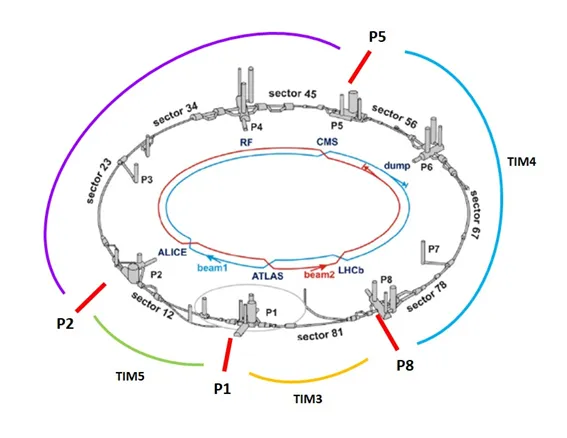
TIM installations in the LHC ready for radiation protection (RP) surveys
Four Train Inspection Monorail (TIM) robots have been successfully installed in the LHC and are ready to perform radiation protection surveys, environmental measurements and inspections on command. Due to a break in the rail continuity in S81 and S12, at least 3 TIMs are required for full LHC coverage, and a fourth has been added
-
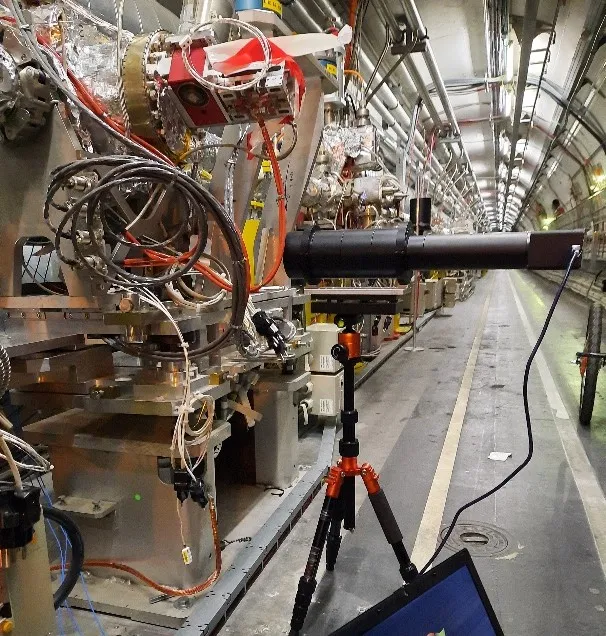
New LHC Piezo-goniometers installed and operational for upcoming ion runs
Piezo-goniometers are used in the LHC for crystal collimation and are critical for the HL-LHC upgrade. This technique uses bent crystals to deflect halo particles from ion beams, and to improve the cleaning performance. Currently four devices are installed in the LHC and have been under test since 2013 in Machine Development runs. During the
-
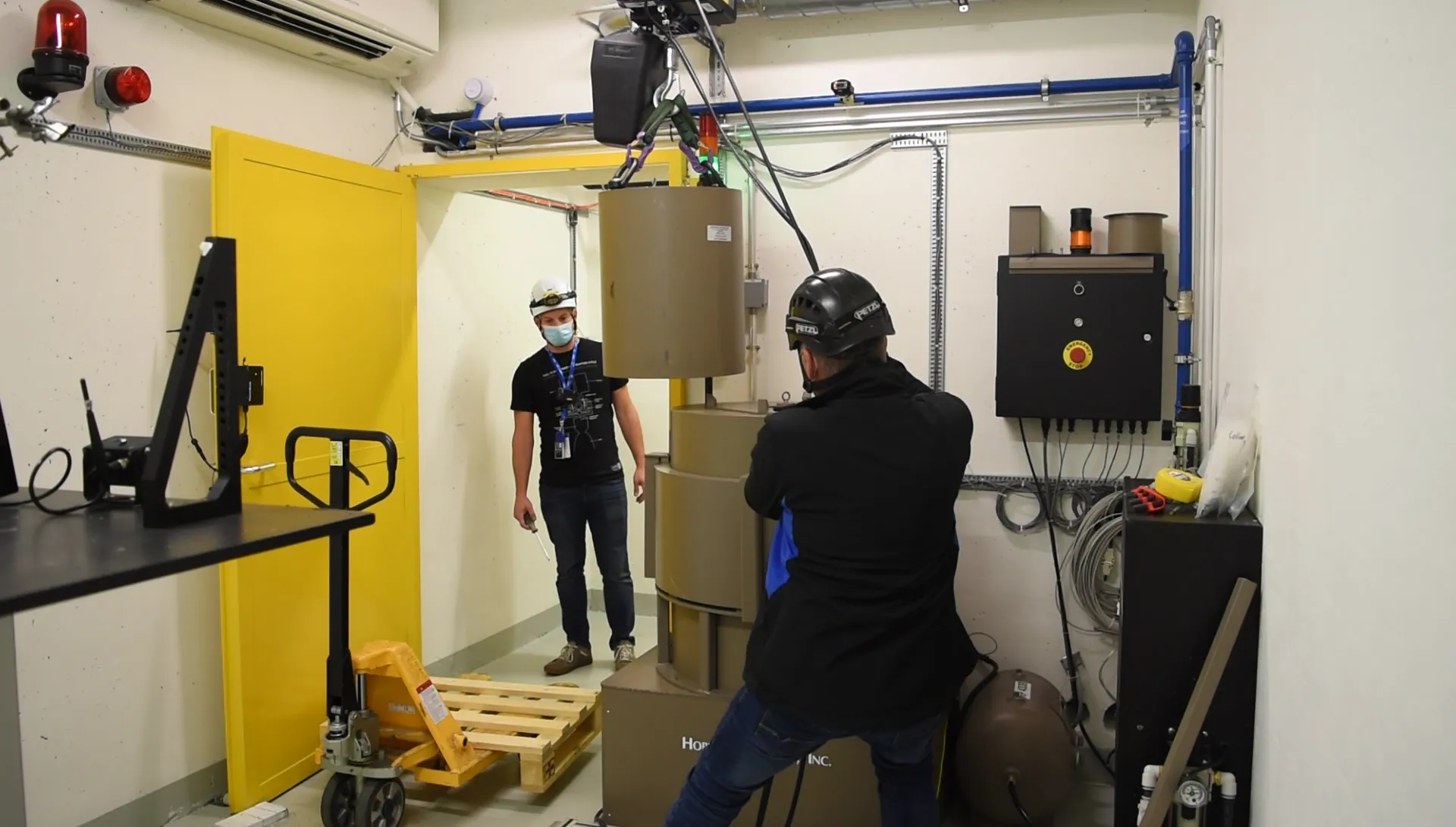
Co60 source successfully upgraded
Last week the BE-CEM-EPR team successfully installed a new Co60 source in the CC60 facility at CERN. The installation was meticulously planned and executed with the orchestration of activities between two external companies, Radioprotection (DG-RP) and Transport (EN-HE) teams. The CC60 facility hosted already a source with an initial activity of 10TBq (in 2014, now
-
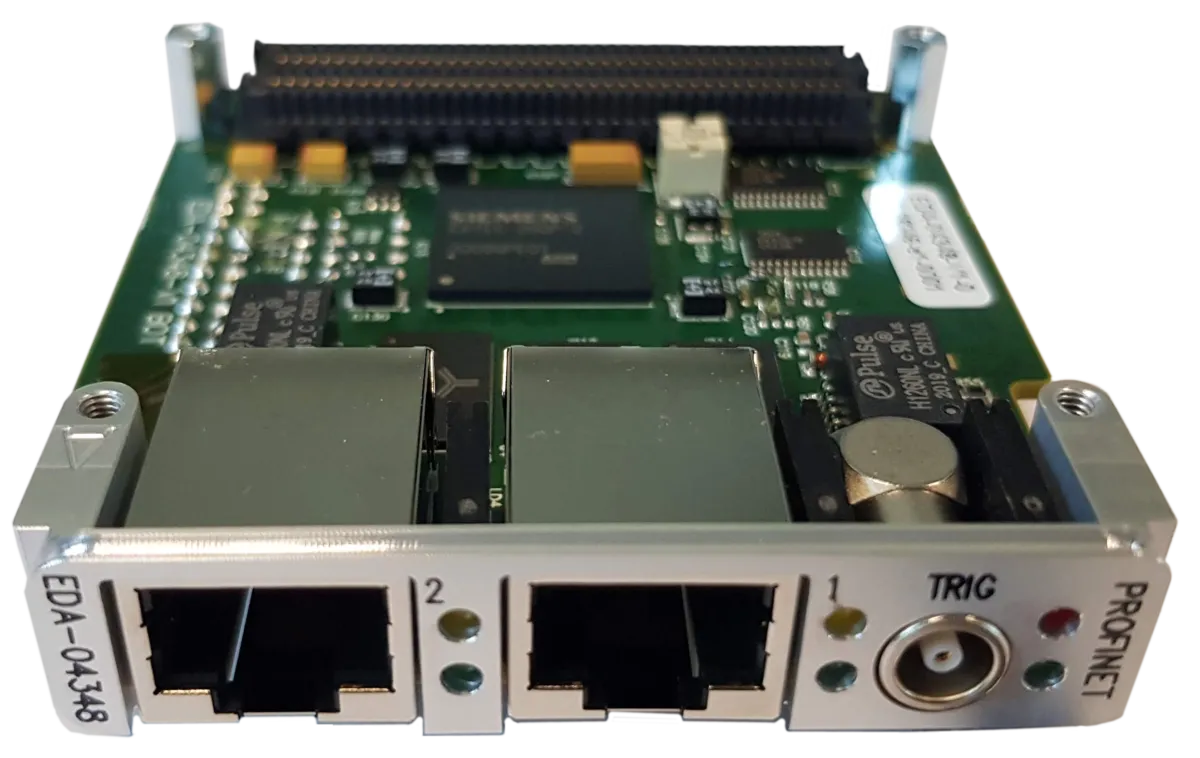
FMC Profinet
Real-time control of custom electronics from industrial PLCs There are two main categories of generic accelerator control hardware solutions available for the CERN community: Each category has its defined use-cases and relies on well-standardized, real-time communication protocols, e.g. Profinet for industrial controls, and White Rabbit and WorldFIP for custom electronics. However, until today, there was
-
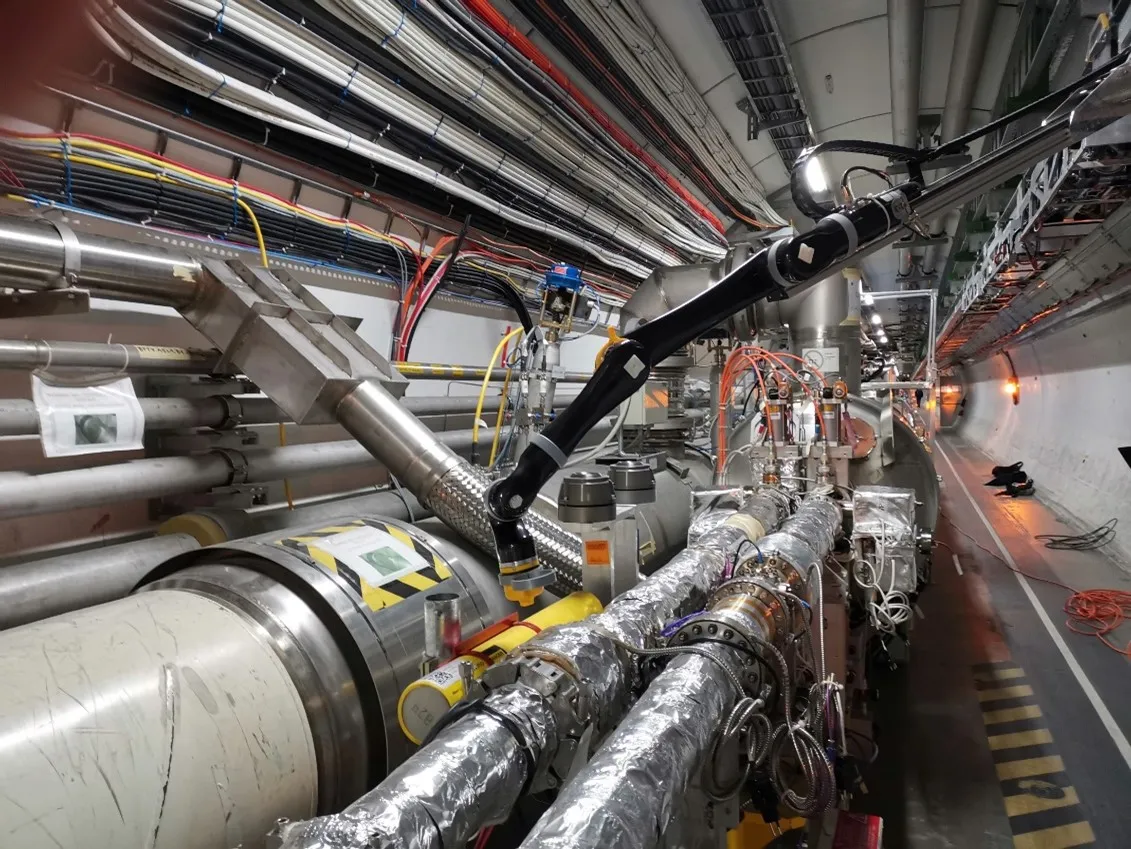
LHC BLM sensors automatic validation
The Beam Loss Monitor (BLM) test campaign in the LHC with the new robotic wagon of the Train Inspection Monorail (TIM) started successfully at the beginning of July. This new wagon has been developed ad hoc to perform, autonomously, the validation of most of the 4000 BLM in the LHC tunnel, saving time and dose