
Category: News Page
-
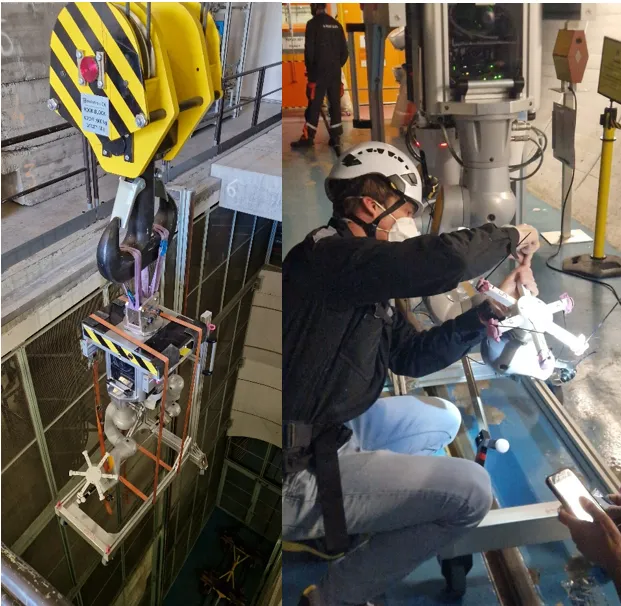
Successful Robotic Beryllium Detection in North Area TCC2
Toward the end of last year, the robotics team received a request to inspect hot areas in TCC2 and test for potential beryllium contamination. The team collaborated with various groups to define a detection procedure using dry wipes, and designed, built, and tested a new tool for the CERN robot CRANEbot to carry out the
-
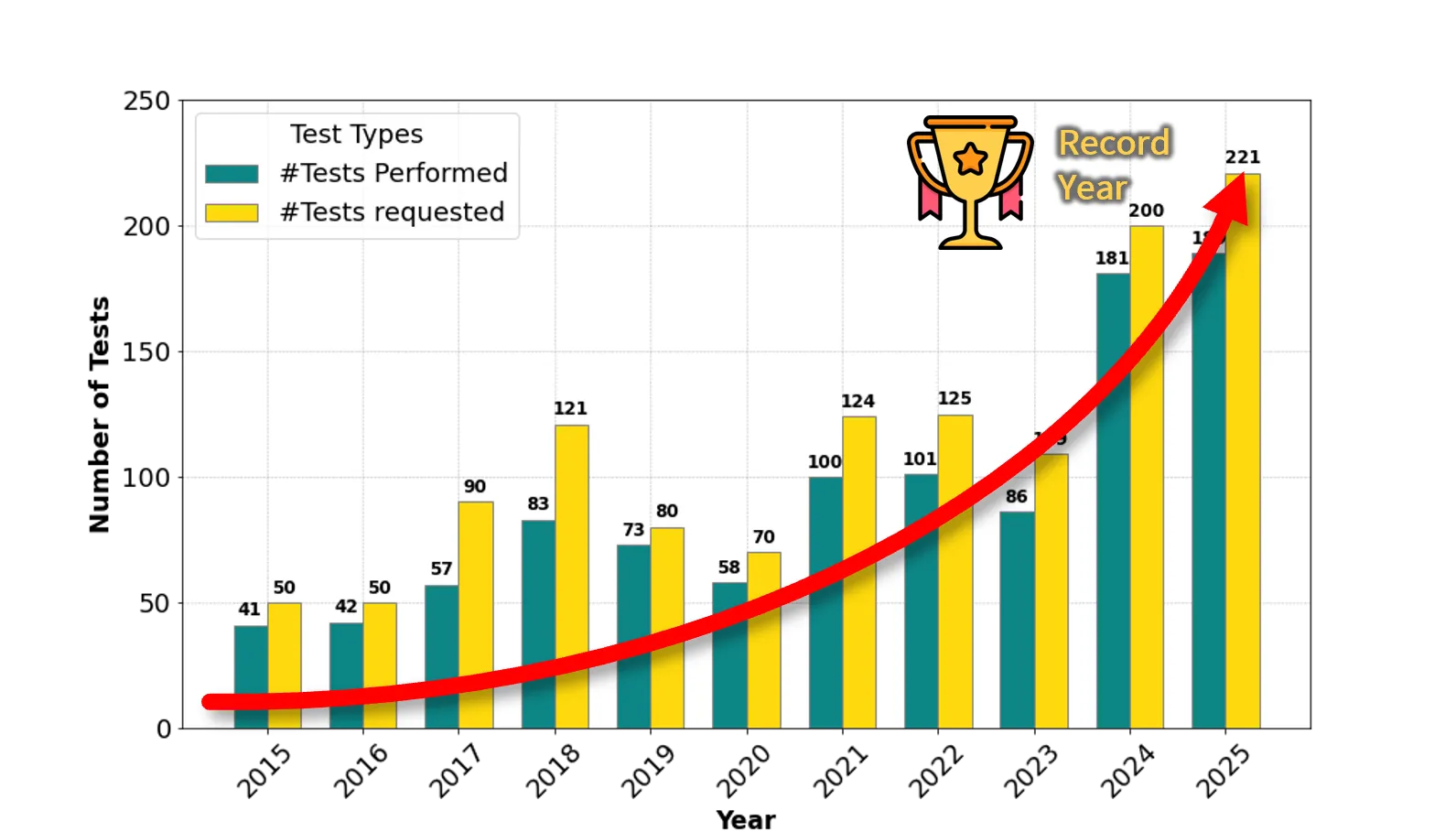
A Record Year in Radiation Testing!
In 2025, the CERN EPR Radiation Test Service reached an all-time high level of performance, setting new records across all major operational metrics. This significant increase in capacity is a key enabler for the qualification of the final LS3 production batches planned for 2026 and will play a crucial role in validating the radiation tolerance
-
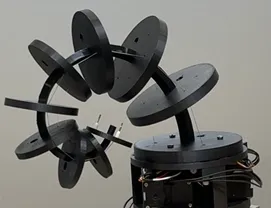
New soft robot prototypes for the CTAM project
October marked a major milestone for the CTAM project in BE-CEM-MRO: The first integration tests of a brand-new soft robot prototype. Mounted on the FCC robot, this innovative design showcases impressive flexibility, compliance, and modularity, proving the potential of next-generation continuous tendon-actuated manipulators (CTAM). The robot consists of a tapered, flexible TPU 95A backbone with
-
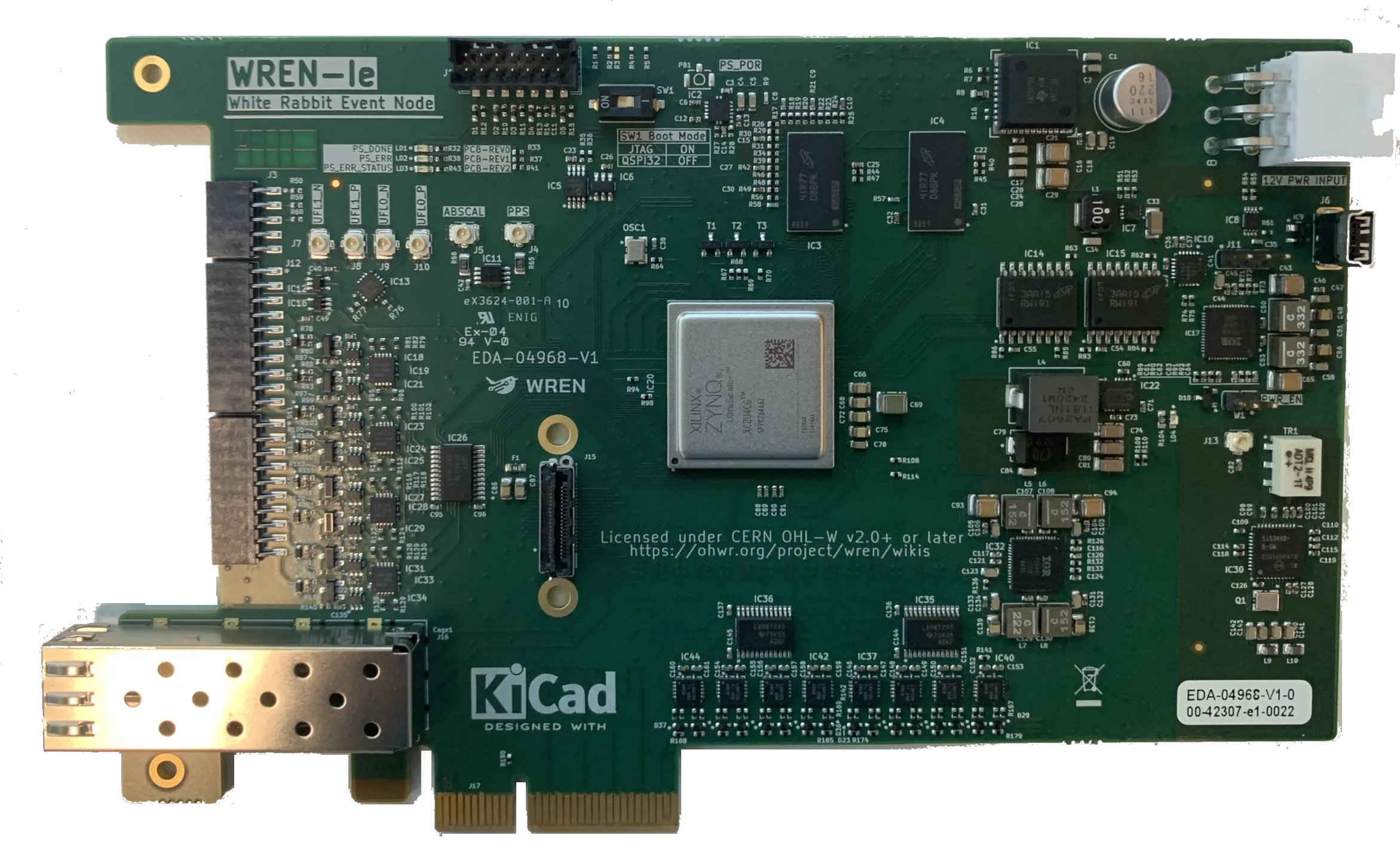
White Rabbit Event Node Deployment
The pilot deployments of the new WRT (White-Rabbit-based Timing) system are progressing successfully and delivering excellent results! In a retrospective meeting held last week, marking one year since the first pilot deployments, users expressed high satisfaction with both the product and the support provided. The outcome highlights a strong example of effective multi-group collaboration. The
-
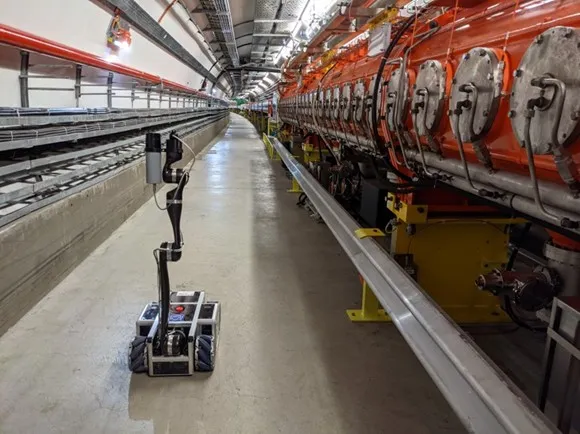
Robotic RP Surveys Successfully Completed in SPS and LHC for TS1 2025
SPS and LHC Radiation Protection surveys were successfully carried out before the Technical Stop 1 in 2025. Coordinated by RP and operated by BE-CEM from the CCC, two CERNBotSPS Measurement and Inspection Robots for Accelerators (MIRA) robots in the SPS and four Train Inspection Monorail (TIM) robots in the LHC drove around the accelerators carefully
-
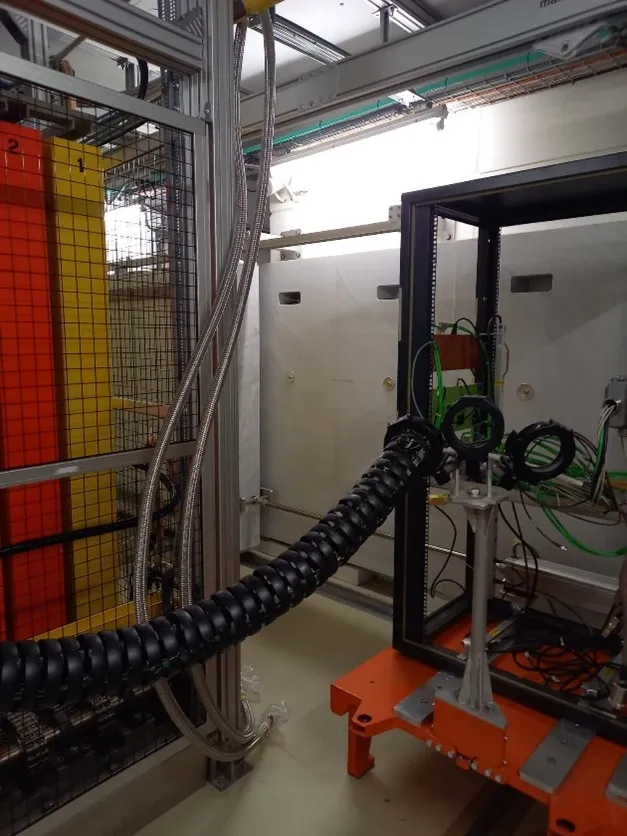
PXI-Based SEL System Characterizes High-Q₀ Superconducting Swell Cavity
A mobile, PXI-based proof-of-concept system achieves flexible operation across pulsed and CW modes successfully tested on the SWELL cavity in SM18. At CERN, the SRF team is responsible for characterizing superconducting RF cavities through extensive testing under realistic operational conditions. Their work is essential for providing insights into cavity performance, refining design parameters, and identifying
-
Distributed I/O Tier pilot deployment for Warm magnet Interlock Controller v2
We are pleased to announce the successful deployment of the radiation-tolerant Distributed I/O Tier (DI/OT) for the pilot run conducted by the TE-MPE group earlier this year. This milestone represents a key step in the WIC2 (Warm magnet Interlock Controller v2) renovation project, with the system now installed in the TI2 transfer line. The current
-
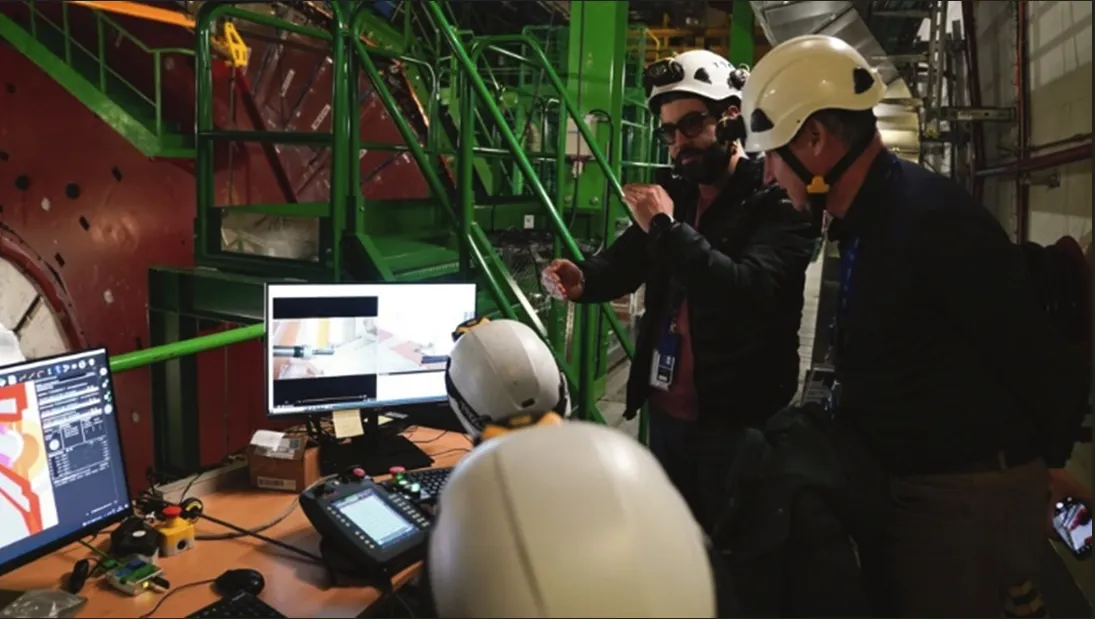
Robotic Milling of the CMS Rotating Shielding
As part of the High-Luminosity Large Hadron Collider (HL-LHC) upgrade, critical modifications are underway to enhance reliability and performance. The existing vacuum sector valves within the LHC tunnel will be removed and replaced by advanced VAX modules, strategically positioned inside the rotating shielding structures of the CMS and ATLAS detectors. The installation posed a significant
-
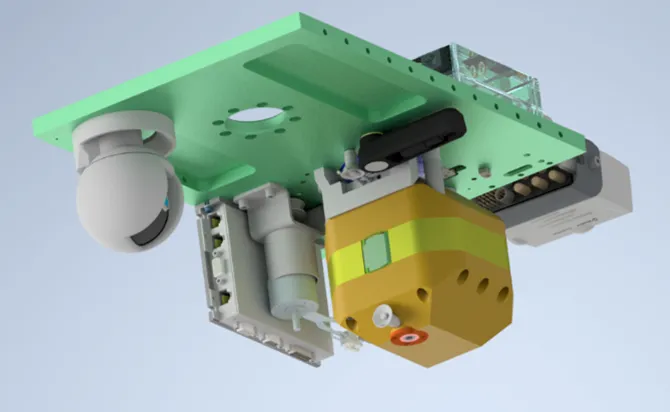
n_TOF SPALLATION TARGET AUTOPSY
With the construction, installation, and commissioning of the third-generation n_TOF spallation target, it has been proposed to execute an autopsy of a second-generation target aimed at analysing the internal status of the core and evaluate the presence of erosion-corrosion damage and plastic deformations due to interaction with beam and creep. The accomplishment of this task
-
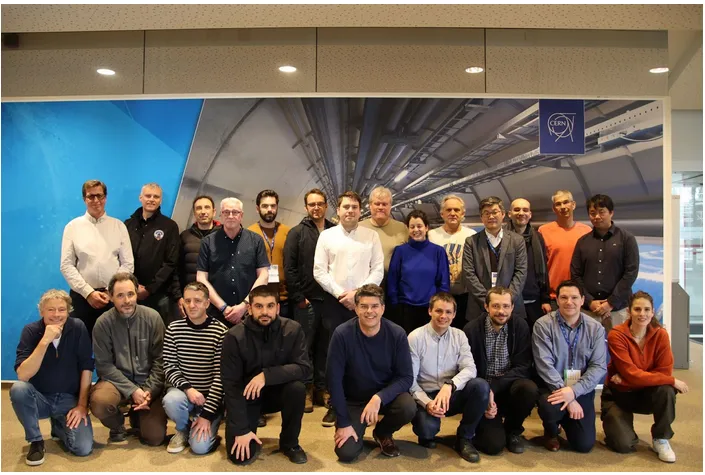
White Rabbit Collaboration meeting held at CERN
White Rabbit (WR) is an open-source technology born at CERN. It is based on standards (Ethernet and the Precision Time Protocol, PTP) and allows the synchronisation of nodes in fibre networks with an accuracy better than 1 nanosecond. Since its standardisation within IEEE 1588, it has been widely adopted in many applications, both in industry